

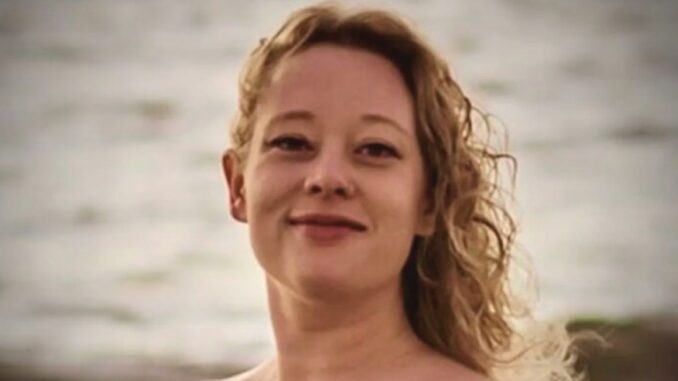

This cannot be reduced to a single case file. Renee Nicole Good, 37, was shot and killed by an ICE agent on a residential street in Minneapolis, and with her death, a wound that the city has failed to heal was laid bare once again: that of an armed authority that acts first and explains later.
It wasn’t a confrontation at the border or a nighttime chase; it happened in broad daylight, in a neighborhood, in front of cameras and witnesses.
On Wednesday morning, January 7, at approximately 10:25 a.m., agents from U.S. Immigration and Customs Enforcement (ICE) surrounded a vehicle stopped on a residential street. Videos recorded by witnesses show shouted orders, an attempt to open the driver’s side door, and a gun pointed at the windshield. Then, at least two shots were fired. The car went out of control and crashed into another parked vehicle. Good died at the scene.
This is the fifteenth incident in which ICE agents have shot at someone since the Trump Administration’s immigration crackdown began, according to Trace, which tracks gun violence nationwide. Four people have been killed by ICE agents.
Trump blames ‘radical left’
From Washington, the response was immediate and harsh; President Donald Trump asserted that an agent had been “brutally run over” and blamed the “radical left” for threatening and attacking ICE agents.
For her part, Homeland Security Secretary Kristi Noem stated that Good attempted to use her vehicle as a weapon and labeled the incident “domestic terrorism,” noting that the agent fired “defensive shots.”
Minneapolis officials call ICE ‘reckless’
But in Minneapolis, the story didn’t end there. Mayor Jacob Frey called the agent’s actions reckless and publicly demanded that ICE withdraw from the city.
Local police chief Brian O’Hara explained that the woman was blocking the road in her vehicle when a federal agent approached on foot, and that she began to move forward. Available video footage does not confirm whether the agent was struck by the car.
However, citizen testimonies contradict the federal narrative. Emily Heller, a resident of the area, stated that she saw an officer attempt to open the vehicle door and fire “point-blank” as the driver was already getting out.
An official statement from Minneapolis City Hall maintained that Good was “looking out for her neighbors” when she was shot.
The FBI opened an investigation to clarify the facts, while Minnesota Governor Tim Walz rejected the federal version, writing, “Don’t believe this propaganda machine,” and promising a full investigation and accountability.
From their respective positions, high-level Democratic leaders, including former Vice President Kamala Harris, denounced the Trump administration’s narrative as a manipulation.
Protestors denounce shooting
Geography matters. The shooting occurred approximately one mile from where George Floyd was killed in 2020. Minneapolis knows what a video, a death, and an unconvincing official version mean. That collective memory reignited the protests.
Last night, protests and marches took place, and the demonstrations spread to other cities such as New Orleans, Miami, Seattle, and New York.
The impact was immediate. Minneapolis Public Schools canceled classes for the rest of the week due to security concerns, following reports of federal arrests outside a high school. Fear was no longer abstract; it was knocking on doors once again.
None of this is happening in a vacuum. In recent weeks, the Trump administration deployed nearly 2,000 additional federal agents to Minneapolis, one of the largest concentrations of the Department of Homeland Security in a U.S. city in recent years.
Immigration policy ‘enforced at gunpoint’
The operation is part of an immigration crackdown linked to alleged irregularities in social assistance programs and a previous campaign targeting people with deportation orders, particularly within the Somali community.
That community has been a repeated target of presidential rhetoric. Trump has called them “trash” and withheld federal funding for childcare in Minnesota.
In response, Mayor Frey was emphatic: “They [ICE] are not improving the city’s safety. They are tearing families apart and sowing chaos.”
The question that remains goes beyond an ongoing criminal investigation. It is a moral and political question: what does it mean to live in a city where immigration policy is enforced at gunpoint, where the border is no longer on a map but on every block, and where a woman can die while the country argues about who controls the narrative?
Minneapolis has already learned that when power shoots first and explains later, the damage is not erased with statements; it remains in the memory, in the streets, and in the name that now heads this story: Renee Nicole Good.
Be the first to comment